August 9, 2026
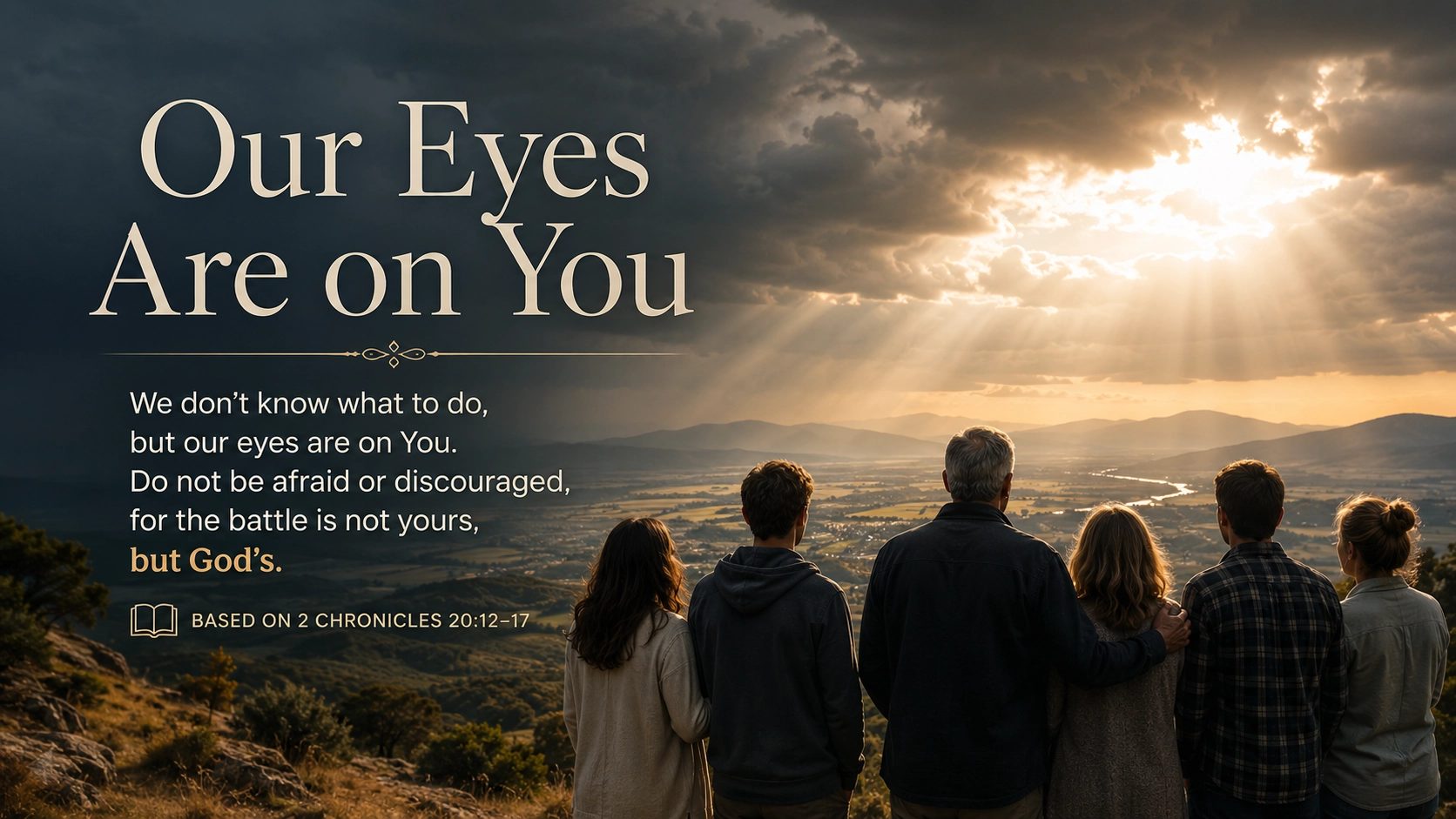
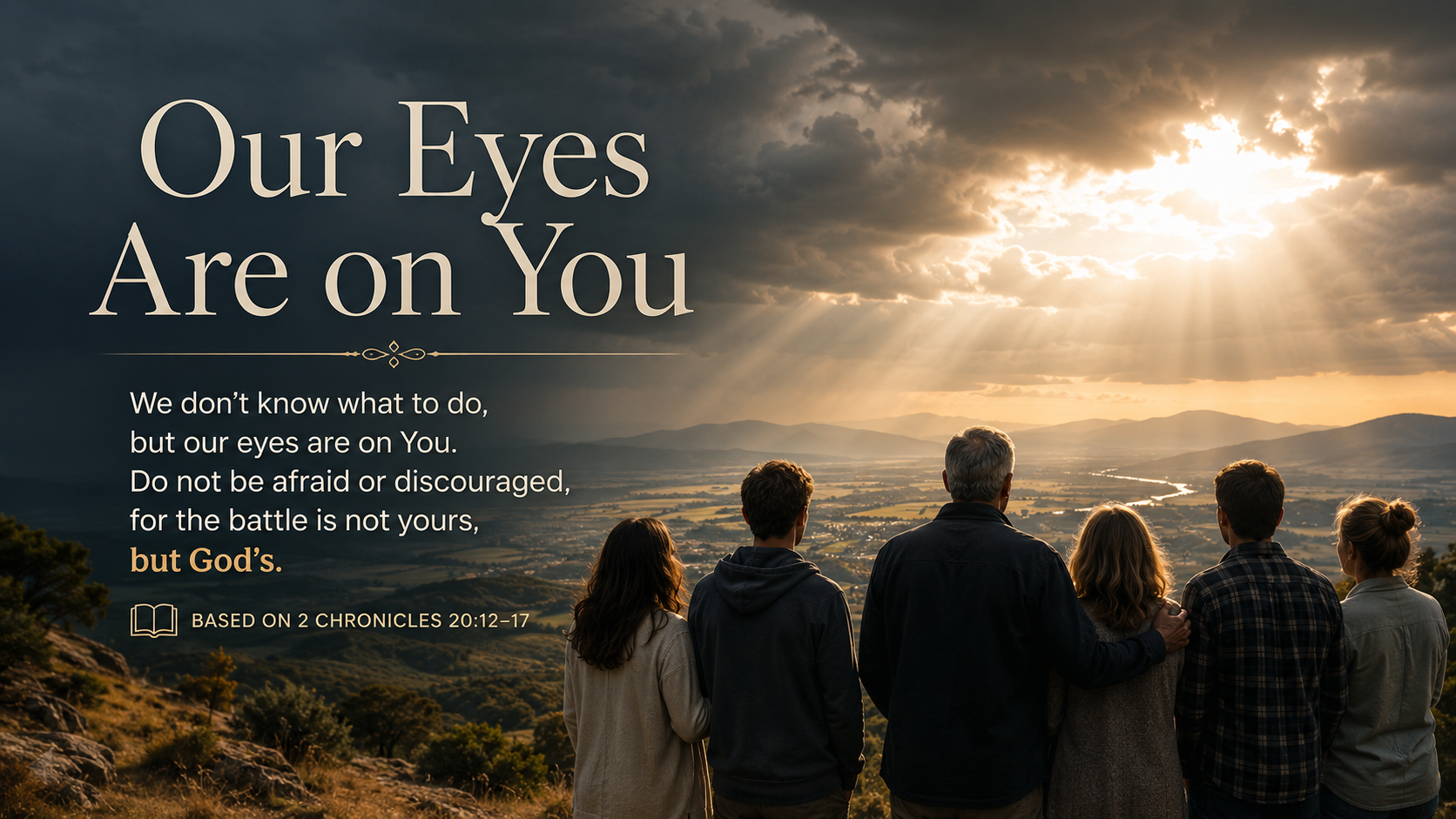
Judah faces an approaching army that is too powerful for the nation to defeat. King Jehoshaphat gathers the people to seek God and admits that they have neither the strength nor the wisdom to overcome the threat. He prays, “We do not know what to do, but our eyes are on you.” God answers through Jahaziel, assuring the people that they do not need to be afraid because the battle belongs to Him. They are called to take their positions, stand firm, and watch for God’s deliverance.
Devotional: Jehoshaphat and the people of Judah were surrounded by an enemy they could not defeat. The threat was real, the danger was close, and fear spread through the nation. Jehoshaphat didn’t pretend that everything would be fine. He called the people together, prayed honestly, and admitted, “We do not know what to do, but our eyes are on you.”
That sentence gives us a faithful way to respond when the wind rises. Faith doesn’t require us to know exactly what to do. It doesn’t demand that we feel calm, confident, or in control. Faith begins when we stop pretending that we can manage everything and turn our attention toward the One who can see what we can’t.
Fear often narrows our vision. We stare at the problem until it fills the whole horizon. We rehearse every possibility, imagine the worst outcome, and measure our weakness against the size of the challenge. Before long, the trouble feels larger than God. Jehoshaphat’s prayer interrupts that pattern. He looks honestly at the danger, but he refuses to let the danger become the only thing he sees.
God answers by telling the people not to be afraid or discouraged because the battle belongs to Him. That promise doesn’t mean they have nothing to do. They’re still called to take their position, stand firm, and watch for God’s deliverance. Trust isn’t passive. It places us where God asks us to stand, even when we can’t see how the story will unfold.
There will be times when we don’t know what to do next. We may face a decision with no easy answer, wait for news we can’t control, or carry a burden that feels greater than our strength. In those moments, we can pray with the same honesty: “Lord, I don’t know what to do, but my eyes are on You.”
The situation may not change immediately. Fear may still whisper. Yet when our eyes are fixed on God, fear no longer decides where we stand. We remember that we aren’t abandoned, the battle isn’t ours alone, and grace is already at work beyond what we can see.
Looking toward God doesn’t erase human weakness. It gives weakness somewhere to rest. The God who met Judah in its fear still meets us with mercy, steadies us with His presence, and leads us one faithful step at a time.
Action: Name one situation today in which you don’t know what to do. Write it down, then pray Jehoshaphat’s words slowly: “We do not know what to do, but our eyes are on you.” Ask God to show you where to stand and what faithful step to take next.
Prayer: Faithful God, You know the situations that leave me afraid, uncertain, and overwhelmed. Forgive me when I stare at the problem until I lose sight of You. I don’t always know what to do, but I choose to turn my eyes toward You. Remind me that I’m not alone and that no threat is greater than Your power or beyond Your care. Help me stand where You place me, trust what You have spoken, and take the next faithful step. Steady my heart with Your presence and teach me to rest my weakness in Your strength. In Jesus’ name I pray. Amen.
Thought for the Day: When I don’t know what to do, I can still choose where to look.
Jehoshaphat and the people of Judah faced a threat they couldn’t defeat and a future they couldn’t control. Instead of pretending to be fearless, they prayed honestly: “We do not know what to do, but our eyes are on you.”
Faith doesn’t mean having every answer or never feeling afraid. It means turning our attention toward God when fear begins to fill the horizon. When we don’t know what to do next, we can stand firm, trust that we aren’t alone, and keep our eyes on the One whose grace is already at work.