October 30, 2026
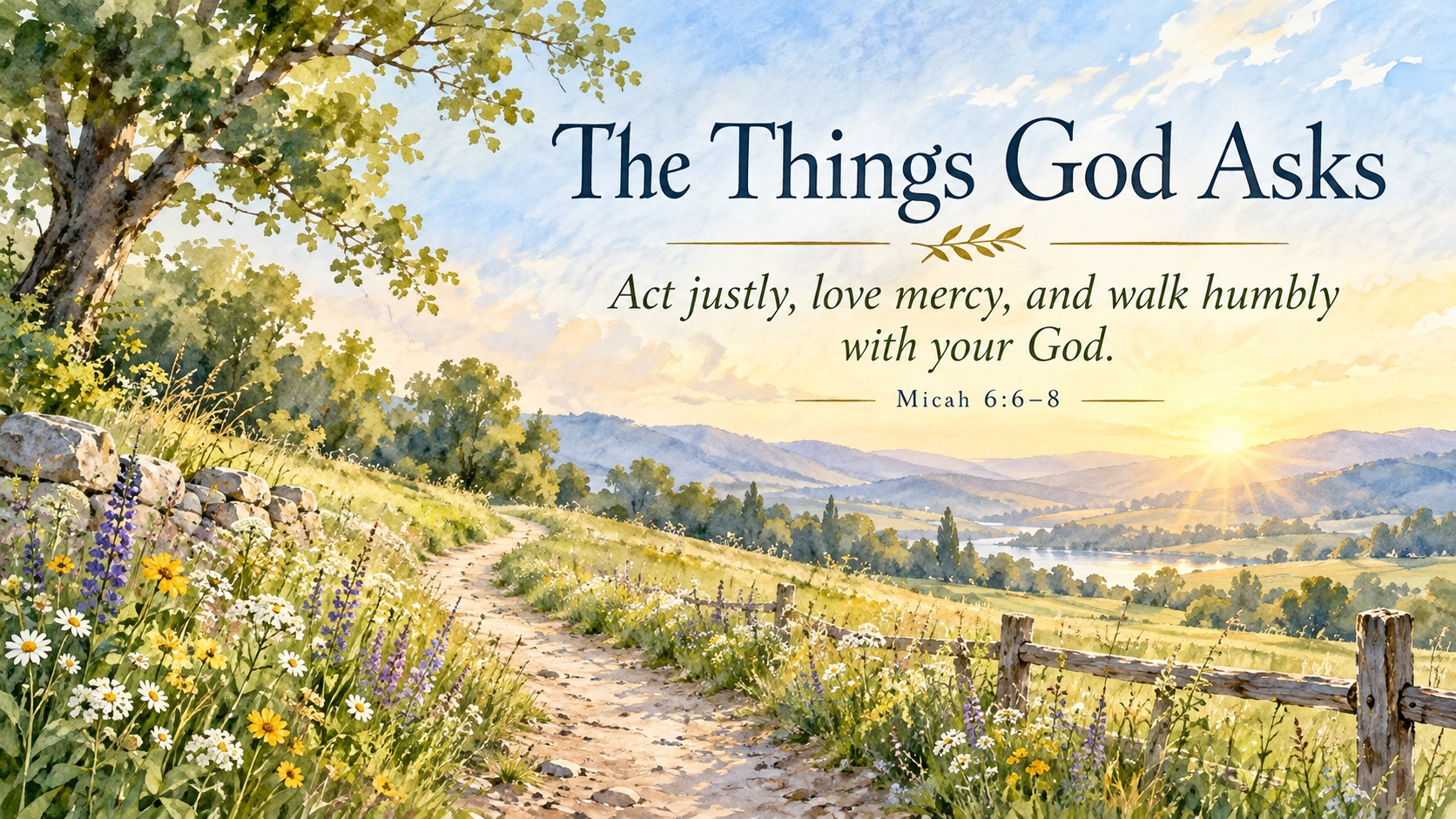
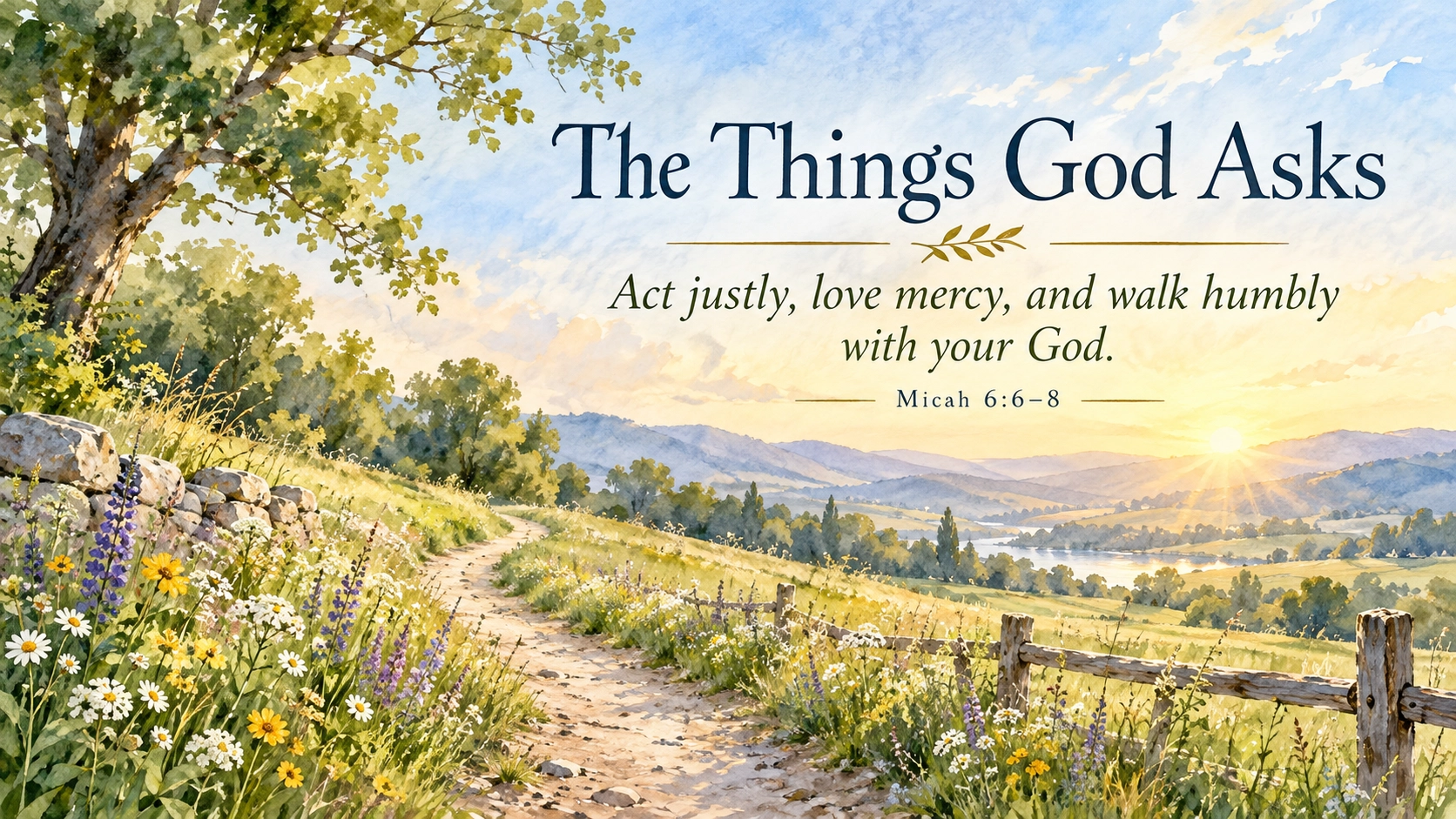
The prophet Micah addresses people who are concerned about what offerings they should bring before God. He explains that God has already shown them what is good. Rather than depending upon increasingly elaborate sacrifices, God's people are called to act justly, love mercy, and walk humbly with Him. Faithfulness must be expressed through the way they live and treat others.
Devotional
There's something comforting about a checklist. We can see what needs to be done, mark off each task, and feel satisfied when everything has been completed. Sometimes we approach our relationship with God the same way. We attend worship, give our offerings, read Scripture, and participate in church activities. These are important practices, but they were never meant to become a substitute for a life shaped by God's love.
The people addressed by Micah wondered what sacrifices would please God. They considered increasingly impressive offerings, as though religious devotion could make up for the way they were living. But Micah reminded them that God had already shown them what was good. They were to act justly, love mercy, and walk humbly with Him. These weren't additional religious duties to complete. They described the kind of people God was calling them to become.
Justice may mean speaking up when someone is treated unfairly. Mercy may mean showing patience toward someone whose circumstances we don't fully understand. Humility may mean admitting when we're wrong and being willing to learn from others. John Wesley understood that our devotion to God and our love for others belong together. Prayer and worship draw us closer to God, while acts of compassion allow His love to become visible in our everyday lives.
We aren't saved by completing enough religious activities or doing enough good works. We are saved by God's grace through faith in Jesus Christ. But that grace is meant to change us, shaping our hearts and influencing the way we treat others. God isn't asking us to put on a more impressive religious performance. He's inviting us into a relationship with Him that makes a difference in how we live.
Action
Consider which part of Micah's teaching needs your attention today. Is there an opportunity to support someone who is being treated unfairly, extend mercy to a person who has disappointed you, or acknowledge a mistake with humility? Choose one practical response and follow through.
Prayer
Loving Father, thank You for reminding me that faithfulness involves more than outward religious practices. Help me care about justice, extend mercy generously, and walk humbly in Your presence. Keep me from becoming so concerned with appearing faithful that I overlook the people who need compassion. Let Your grace continue changing my heart so that my daily choices reflect the love of Jesus Christ. In His name, Amen.
Thought for the Day
God is interested in more than what we offer Him. He cares about how we live.
What does God really ask of us? Micah reminds us that faithful living means doing justice, loving mercy, and walking humbly with God. These aren't complicated ideas, but they can change the way we treat people every day.