November 22, 2026
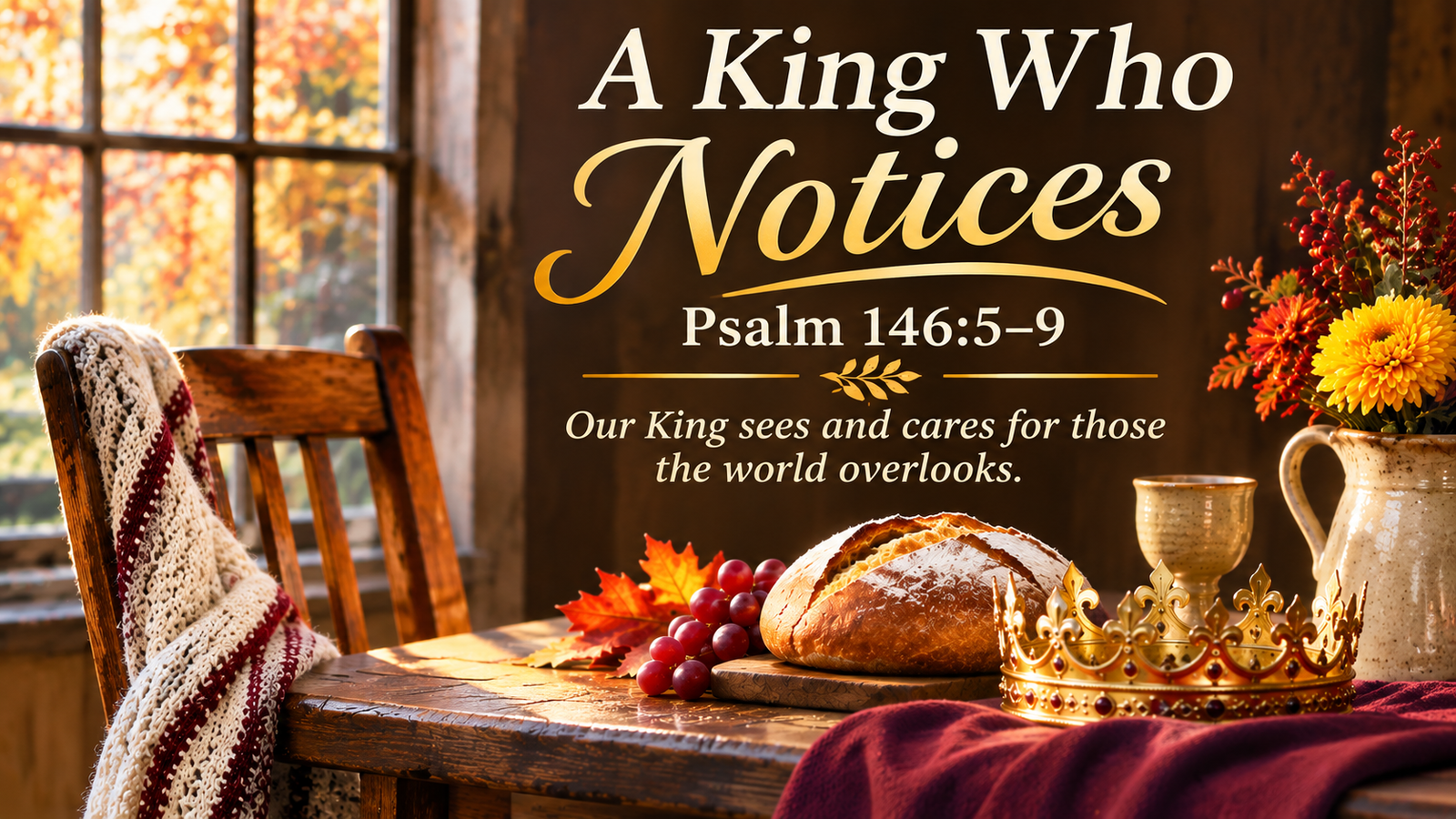
The psalmist praises God as the Creator who remains faithful forever. He upholds the oppressed, provides food for the hungry, sets prisoners free, and watches over foreigners, widows, and those who have lost their families. Unlike earthly rulers whose power eventually ends, God reigns forever, and His care reaches those who are often overlooked.
Devotional
When we think about kings and rulers, we usually think about people who hold positions of great authority. They make decisions that affect entire nations, command armies, and have access to resources most people can only imagine. Their names appear in history books, and their accomplishments become part of the stories future generations tell.
But Psalm 146 gives us a different picture of what matters to the greatest King of all.
The psalmist tells us that God is the Creator of heaven and earth, the sea, and everything in them. His power extends over all creation. Yet when the psalmist describes how God exercises that power, the focus turns toward people who have very little influence. God upholds the oppressed, feeds the hungry, and watches over strangers.
There is something wonderfully reassuring about that.
The God who created the universe notices people who may feel invisible to everyone else. He knows the circumstances of the widow who struggles with loneliness, the family trying to stretch its grocery budget, and the stranger who doesn't know where to turn for help.
His concern isn't limited to people who can offer Him something in return.
Today is Christ the King Sunday, when Christians remember that Jesus Christ reigns as Lord over all creation. We celebrate His authority, His victory over sin and death, and the promise that His kingdom will never end.
But we also remember what kind of King He is.
Jesus spent His earthly ministry reaching toward people who were sick, poor, rejected, and forgotten. He welcomed those whom respectable society preferred to avoid. He touched people others considered unclean. He gave His attention to those whose names would never appear in the history books.
He showed us the heart of the Father.
That should influence how we understand our own importance in God's kingdom. We sometimes measure the value of our efforts by how many people notice, how much money we raise, or how impressive the results appear. Those things can tell us something, but they never tell the whole story.
A quiet visit may bring hope to someone who has spent days alone. A meal may remind a struggling family that they haven't been forgotten. A conversation may help someone believe that their life still matters.
These things may seem small, but they matter to the King who notices.
As Thanksgiving approaches, we have an opportunity to thank God for His care by becoming more attentive to the people around us. We cannot meet every need, but we can respond to the opportunities He places before us.
And we can do so with confidence that the King who sees the overlooked also sees us.
Action
Pay attention to someone whose needs might ordinarily escape your notice. Offer a conversation, a meal, an encouraging word, or practical assistance. Let your actions remind that person they matter.
Prayer
Heavenly Father, thank You for being a God who sees every person and understands every need. Thank You for the love You have shown us through Jesus Christ, our Savior and King. Forgive me for the times I have become so occupied with my own concerns that I have overlooked someone who needed kindness. Open my eyes to the people around me. Give me a compassionate heart, willing hands, and the wisdom to respond faithfully. May my life reflect the mercy of the King who notices those the world forgets. In Jesus' name, I pray. Amen.
Thought for the Day
The King who reigns over all creation never overlooks a single person.
What kind of King pays attention to the hungry, the lonely, and the forgotten?
Psalm 146 reminds us that God's greatness is revealed through His faithfulness and care for those who are vulnerable. On Christ the King Sunday, we're reminded that Jesus calls us to reflect that same compassion.