
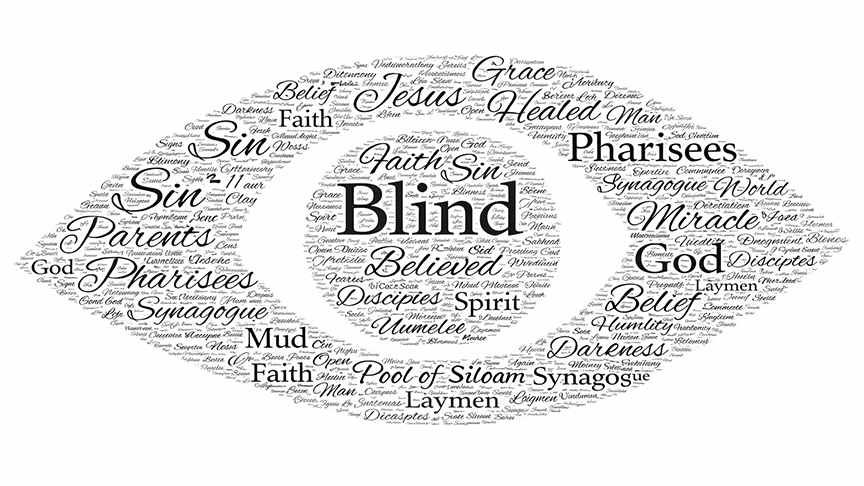
John 9:1–41 begins with a question many people still ask when life goes wrong. As Jesus and His disciples encounter a man blind from birth, the disciples assume suffering must have a cause they can identify. “Who sinned,” they ask, “this man or his parents?” The question reflects a common belief in the ancient world that suffering always resulted from personal failure or divine punishment. Jesus refuses that assumption. Instead of assigning blame, He redirects their attention to what God can do in the present moment.
Jesus answers that the man’s blindness exists so that “the works of God might be displayed in him.” This does not mean God caused the suffering, but that God’s power will be revealed through restoration. Jesus moves the conversation away from speculation about the past and toward the possibility of transformation now. In a world quick to label people by their brokenness, Jesus sees a life that can reveal God’s glory (Keener).
What follows is more than a healing miracle. The story unfolds like a courtroom drama where neighbors, religious leaders, and even the man’s parents are questioned. Each group responds differently to what has happened. Some celebrate, others doubt, and the religious authorities resist the possibility that God could work outside their expectations. By the end of the chapter, the man who was once blind sees clearly, while those who believed they understood God reveal their own spiritual blindness.
John’s Gospel often uses physical events to reveal deeper spiritual truths. Here, sight becomes a metaphor for faith. The miracle exposes a question that runs through the entire Gospel: will people recognize the light standing in front of them, or will they cling to the darkness of certainty and control (Carson).
Origin and Name
The Gospel takes its name from John, traditionally identified as John the son of Zebedee, one of Jesus’ twelve disciples. He was part of Jesus’ inner circle and witnessed key moments such as the Transfiguration and crucifixion. The Gospel reflects deep personal reflection on Jesus’ identity and mission (Keener).
Authorship
Early church tradition attributes the Gospel to the apostle John. Many scholars recognize that the final form likely reflects both John’s eyewitness testimony and the theological reflection of a community shaped by his teaching. The voice remains consistent with someone closely connected to Jesus’ ministry (Kostenberger).
Date and Setting
John was likely written between AD 85 and 95, later than the Synoptic Gospels. The Christian community at that time faced tension with synagogue authorities and questions about Jesus’ identity. The Gospel responds by emphasizing Jesus as the eternal Word made flesh, fully revealing God (Kostenberger).
Purpose and Themes
John states his purpose clearly, that readers may believe Jesus is the Messiah, the Son of God, and by believing have life in His name (John 20:31). Themes include new birth, light versus darkness, belief, eternal life, and God’s love expressed through Christ.
Structure
The Gospel moves through signs and conversations that reveal Jesus’ identity, followed by His passion, resurrection, and post-resurrection appearances. Personal encounters, like Nicodemus here, carry theological depth.
Significance
John presents Jesus not only as Messiah but as God’s self-revelation. The Gospel emphasizes relationship with God as the center of salvation.
John 9 occurs in the middle of a growing conflict between Jesus and the religious authorities. In chapter 8 Jesus declares Himself the “light of the world.” Chapter 9 immediately demonstrates that claim through action. The healing of the blind man shows that the light of God is not abstract teaching but a living presence that restores human life.
Within the wider biblical story, the theme of sight carries deep meaning. Throughout Scripture, blindness often symbolizes spiritual misunderstanding. Isaiah spoke of a coming servant who would open the eyes of the blind and lead people out of darkness (Isaiah 42:6–7). John presents Jesus as the fulfillment of that promise.
The story also anticipates the increasing rejection Jesus will face as His ministry continues. The miracle draws people toward faith, yet it also hardens the opposition of those who refuse to consider that God may be working outside their control (Wright).
From a Wesleyan perspective, John 9 illustrates prevenient grace at work in human lives. The blind man does not seek Jesus. He does not ask to be healed. Jesus approaches him first. Grace begins the encounter long before the man understands what is happening. Wesley believed God’s grace moves toward people before they recognize their need for Him (Collins).
The man’s spiritual journey unfolds gradually. At first he simply calls Jesus “the man.” Later, he refers to Him as a prophet. By the end of the chapter he recognizes Jesus as the Son of Man and worships Him. Wesley often described faith as a growing awareness of God’s work in our lives. This story reflects that process clearly.
Wesley also warned about the danger of spiritual pride. The Pharisees in the story believe they already possess the truth. Their certainty prevents them from seeing what God is doing in front of them. Wesley taught that humility keeps the heart open to continued transformation.
John 9:1–5, A Different Question
The disciples focus on blame, assuming suffering must connect to someone’s sin. Jesus rejects that framework and shifts the focus to God’s work in the present. The emphasis moves from cause to purpose. Jesus declares Himself the light of the world, revealing that God’s work brings illumination where darkness once ruled (Carson).
John 9:6–12, Healing and Confusion
Jesus heals the man using mud and water, actions that echo the language of creation. Just as God formed humanity from the dust of the ground, Jesus restores sight through clay. The neighbors struggle to believe what they see. Some insist the man only resembles the one who had been blind. The miracle disrupts their assumptions about what is possible.
John 9:13–34, Conflict with the Authorities
The Pharisees investigate the healing, focusing on the fact that it occurred on the Sabbath. Instead of celebrating the miracle, they debate technical violations of religious law. Their questioning grows increasingly hostile, eventually turning toward the healed man’s parents and finally toward the man himself. The man responds with remarkable clarity, stating that anyone who opens the eyes of the blind must be sent from God.
John 9:35–41, True Sight
Jesus seeks out the man after he is expelled from the synagogue. When Jesus reveals His identity, the man responds in worship. The chapter closes with a powerful reversal. Those who were confident in their spiritual sight remain blind, while the man once blind now sees both physically and spiritually (Kostenberger).
This passage carries historical credibility because it reflects real social tensions of the first century. The reference to synagogue expulsion aligns with known conflicts between Jewish authorities and early Christians during the late first century (Keener).
Theologically, the story reveals a consistent pattern in Scripture. God often works through unexpected people and situations, challenging established assumptions about authority and power.
Philosophically, the passage addresses the human tendency to reduce suffering to simple explanations. Jesus resists that impulse and instead reveals a God who brings redemption even in circumstances that seem beyond repair.
Many people still wrestle with the same question the disciples asked: “Why did this happen?” Jesus redirects that question. Instead of searching endlessly for someone to blame, He invites us to look for how God might bring light into the situation.
The story also reminds us that faith often grows gradually. The blind man’s understanding deepens step by step. Many people today experience the same journey. Faith develops through encounters with Christ that slowly reshape how we see the world.
The final lesson is about humility. Those who assume they already see everything clearly risk missing what God is doing. Spiritual sight begins with the willingness to admit we need light.
Isaiah 42:6–7
Psalm 146:8
John 1:4–9
John 8:12
2 Corinthians 4:6
Ephesians 5:8–14
