
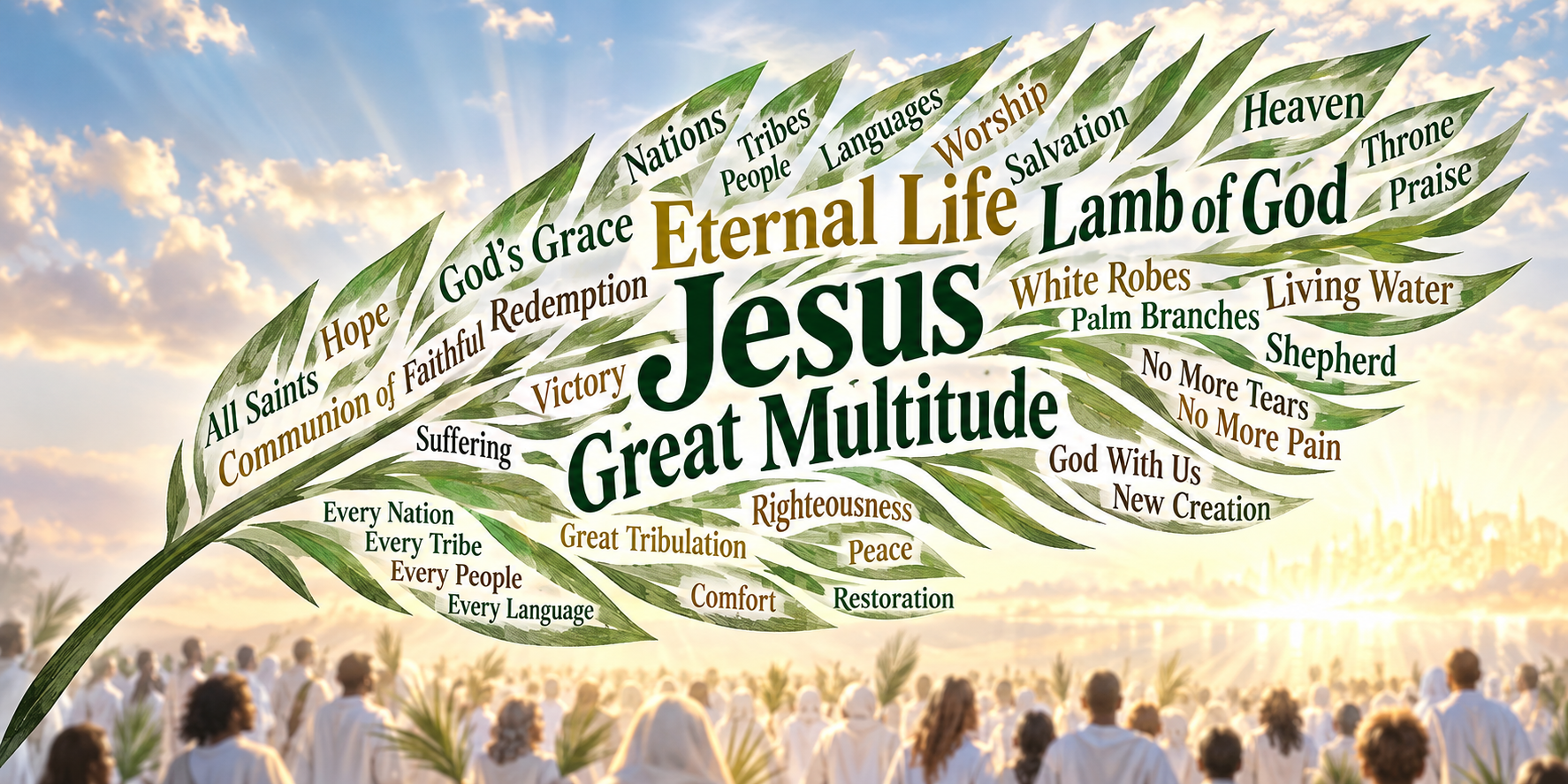
There are times when the promises of Scripture become especially important. We experience loss, watch people we love struggle, and face circumstances that remind us how little control we have over life. Even when our faith is strong, we still have questions. We wonder what happens after death, whether suffering will ever end, and what God's promises mean for those who have gone before us. These questions often become more personal when we are grieving someone whose presence made our lives better.
Revelation 7:9–17 speaks to those concerns through a vision of an enormous gathering before God's throne. The people come from every nation, tribe, people, and language. They are dressed in white robes, holding palm branches, and praising God for the salvation He has provided through Jesus Christ. These are people who have experienced suffering, yet their suffering is no longer the defining reality of their lives. They now stand in the presence of the One who has redeemed them, and nothing can separate them from His care.
John's original readers needed this assurance. They lived in a world where following Jesus could bring rejection, economic hardship, and persecution. The Roman Empire appeared powerful and permanent, while Christian congregations were often small and vulnerable. John wanted them to see beyond their circumstances and understand that the powers controlling their world would not determine their eternal future. The Lamb who had been slain was alive and reigning, and those who belonged to Him would share in His victory.
This passage is particularly meaningful for All Saints Sunday, when the Church remembers those who have died in faith and celebrates the promise of eternal life. It offers comfort to those who grieve, but it also calls the living to remain faithful. John reminds us that Christian hope is grounded in the character and promises of God. We do not know everything about heaven or what eternal life will be like, but we know the Savior who has promised to receive us. The same Jesus who gave His life for our salvation will continue to care for His people throughout eternity.
Origin and Name
The
title Revelation comes from the Greek word apokalypsis, meaning an unveiling or
disclosure. The book begins by identifying itself as a revelation of Jesus
Christ and belongs to a type of literature known as apocalyptic writing. This
form of writing uses visions, symbols, numbers, and heavenly scenes to reveal
spiritual realities and God's purposes for history. Although many people
associate Revelation primarily with frightening events or predictions about the
end of the world, its central purpose is to reveal the victory of Jesus Christ
and encourage believers to remain faithful. The book shows that God is still
working even when human circumstances appear to suggest otherwise (Bauckham).
Authorship
The
author identifies himself as John, a fellow believer who shares in the
suffering and patient endurance associated with Jesus Christ. He explains that
he received his vision while on the island of Patmos in the Aegean Sea, where
he was because of the word of God and the testimony of Jesus (Revelation 1:9).
Early Christian tradition associated the book with John the Apostle, although
scholars continue to debate whether the author was the apostle or another
Christian prophet named John. The language and literary style differ from those
of the Gospel of John, but the two writings share important theological themes,
particularly the identity and saving work of Jesus Christ (Mounce).
Date and Setting
Many
scholars date Revelation near the end of the first century, around AD 90–96,
during the reign of the Roman emperor Domitian, although some favor an earlier
date during Nero's reign. The book was addressed to seven churches in the Roman
province of Asia, located in what is now western Turkey. These Christians lived
in a society where political loyalty, religious observance, and economic
opportunity were often closely connected. Emperor worship and the public
honoring of Roman gods were established parts of civic life, creating
difficulties for believers who refused to participate in practices they
considered idolatrous. The churches faced varying degrees of social pressure,
temptation, and opposition, making John's message of perseverance especially important
(Koester).
Purpose and Themes
Revelation
was written to strengthen Christian faith, expose the false claims of worldly
power, call believers to repentance, and reveal God's ultimate victory through
Jesus Christ. Throughout the book, John contrasts allegiance to Christ with
loyalty to systems shaped by idolatry, exploitation, and violence. Jesus
appears as the Lamb who was slain but now lives and reigns, demonstrating that
God's victory comes through sacrificial love rather than the methods of earthly
empires. The book emphasizes worship, faithful witness, perseverance, judgment,
redemption, and the renewal of creation. Its message is that God remains
sovereign, Christ has conquered death, and evil will not have the final word
(Bauckham).
Structure
Revelation
begins with John's vision of the risen Christ and messages to seven churches in
chapters 1–3. Chapters 4–5 introduce the heavenly throne room and the Lamb who
is worthy to open the sealed scroll. Chapters 6–16 contain visions involving
seals, trumpets, and bowls of judgment, while chapters 17–20 describe the
judgment of Babylon, the defeat of evil, and the final judgment. The book
concludes in chapters 21–22 with a new heaven and new earth, where God dwells
with His people and death no longer exists. Revelation 7:9–17 appears between
the opening of the sixth and seventh seals, offering a reassuring picture of
the redeemed before the visions of judgment continue (Mounce).
Significance
Revelation
has often been treated primarily as a timetable for future events, but such an
approach can overlook the encouragement it offered its original readers. John
wanted Christians to understand their present circumstances in light of God's
eternal purposes. Their suffering was not evidence that God had abandoned them,
and their faithfulness was not wasted simply because they lacked worldly power.
Revelation 7:9–17 brings that message into focus by showing the people of God
gathered safely before His throne. The vision assures believers that the final
outcome of their lives rests with Jesus Christ, whose love and power are
greater than anything they may experience in this world (Koester).
Revelation 7 stands between the opening of the sixth and seventh seals. Chapter 6 describes conquest, violence, scarcity, death, and cosmic disturbance. As the sixth seal opens, the inhabitants of the earth recognize the coming judgment and ask who can stand before God and the Lamb. Chapter 7 answers that question by revealing those who belong to God. Before John describes the next series of judgments, he allows his readers to see that God knows His people and that His saving purposes will be fulfilled despite the suffering they experience (Beale).
The chapter begins with 144,000 servants of God being sealed, representing twelve thousand from each of the twelve tribes of Israel. Interpretations of this number differ, but many scholars understand it symbolically as expressing the completeness of God's people. John then sees an innumerable multitude drawn from every nation, tribe, people, and language. Some interpreters understand these as two distinct groups, while others see two complementary descriptions of the redeemed community. A similar pattern appears in Revelation 5, where John hears about the Lion of Judah but sees a Lamb. What he hears and what he sees reveal different aspects of the same saving work of Christ (Beale).
John's vision also fulfills promises that appear throughout the Old Testament. God promised Abraham that all peoples on earth would be blessed through him (Genesis 12:3). Isaiah described God's salvation reaching the nations and promised that His people would no longer suffer hunger or thirst (Isaiah 49:6–10). Psalm 23 portrays the Lord as a Shepherd who provides, protects, and guides His people, while Isaiah 25:8 promises that God will destroy death and wipe away every tear. Revelation brings these promises together and identifies Jesus Christ as the Lamb and Shepherd through whom they are fulfilled (Bauckham).
The passage also anticipates the closing chapters of Revelation. In Revelation 21:1–4, John describes the new heaven and new earth, where God dwells with His people and removes death, mourning, crying, and pain. Revelation 22:1–5 presents the river of the water of life flowing from God's throne. These later visions develop the promises first introduced in chapter 7. Together, they show that God's purpose is not simply to rescue people from suffering for a little while but to bring His redeemed creation into everlasting fellowship with Him. What begins with God's promises to Israel reaches its fulfillment through the saving work of Jesus Christ.
Revelation 7:9–17 reflects the Wesleyan understanding that salvation begins with God's grace and leads toward complete fellowship with Him. John does not describe a multitude gathered before God's throne because its members accomplished enough good works to earn eternal life. They stand there because of the saving work of Jesus Christ. Their robes have been made white through the blood of the Lamb, and their praise acknowledges God as the source of salvation. John Wesley emphasized that God's prevenient grace reaches toward humanity before people recognize their need for Him. This grace awakens, draws, and enables people to respond in faith. The presence of people from every nation reminds us that God's grace is not limited by nationality, social position, or cultural identity. God loves all people and desires their salvation, although His love does not eliminate the freedom to accept or reject His invitation (Wesley).
The white robes of the multitude also point toward justifying grace. Through faith in Jesus Christ, sinners receive forgiveness and are restored to a right relationship with God. Their righteousness comes through Christ rather than their own achievements. Yet salvation does not end with forgiveness. Wesley understood sanctifying grace as God's continuing work of transforming believers into people whose lives increasingly reflect His love. The worshiping multitude provides a picture of where that transforming grace is leading. Their fellowship with God is complete, and the sin and selfishness that once damaged human relationships no longer stand between them. Randy Maddox describes Wesleyan theology as a relationship of grace and response in which God's gracious activity makes genuine Christian transformation possible (Maddox).
Wesley's understanding of Christian perfection also helps explain the passage. For Wesley, Christian perfection concerns love for God and neighbor rather than an inability to make ordinary human mistakes. As believers grow in grace, they learn to love more faithfully and place God's will above their own desires. Revelation 7 presents the fulfillment of this life of love. The redeemed stand together before God, united in worship without the divisions, hostility, and selfishness that so often characterize human relationships. Their eternal fellowship reflects the goal toward which sanctifying grace has been moving throughout their lives. The Church is called to begin reflecting that reality now through worship, compassion, reconciliation, and faithful service (Maddox).
The passage also speaks directly to the Wesleyan understanding of the communion of saints. Christians believe that the Church includes those who are living and those who have died in Christ. Death does not destroy the relationship believers have with their Savior, and the hope of resurrection rests upon His victory over the grave. This makes Revelation 7 especially meaningful for All Saints Sunday. We remember those whose lives helped shape our faith, give thanks for their witness, and entrust them to God's loving care. We may continue to grieve their absence, but we do so with the confidence that God's saving work is greater than death. The Lamb who gave His life for His people will remain their Shepherd throughout eternity.
Revelation 7:9, A Great Multitude Before the Throne
John begins by describing a multitude so large that no one can count it. These people come from every nation, tribe, people, and language, yet they stand together before the throne of God and the Lamb. The scene contrasts with the numbered servants of God earlier in the chapter and emphasizes the extraordinary reach of His redeeming purpose. In the ancient world, nationality, citizenship, language, and social position often determined a person's opportunities and standing within society. John's vision overturns those distinctions by showing people from every part of the world united through their relationship with Jesus Christ. Their diversity remains visible, but it no longer divides them. The unity of the redeemed comes from their shared salvation rather than cultural sameness (Koester).
The multitude wears white robes and carries palm branches, both of which communicate important aspects of their identity. White clothing represents purity, victory, and belonging to Christ, while palm branches are associated with celebration and triumph. Palm branches were also used during the Jewish Feast of Tabernacles, when the people celebrated God's provision and faithfulness. John presents the redeemed as people whose suffering has given way to victory and joyful worship. They have not reached this place because they were powerful or influential in the world. Their victory comes through the Lamb who was slain, reminding John's readers that faithfulness to Christ matters even when the world considers them defeated (Beale).
Revelation 7:10, Salvation Belongs to God
The multitude praises God and the Lamb as the source of salvation. Their worship begins with the recognition that they have been rescued through God's gracious action rather than their own achievements. This declaration would have carried particular meaning for Christians living under Roman authority, where emperors could be honored as protectors and benefactors who brought security and peace. John reminds his readers that earthly rulers cannot provide the salvation that belongs to God alone. The Lamb, whose victory came through sacrificial love, offers what political power and human achievement can never accomplish. For Christians today, this challenges the temptation to place ultimate confidence in governments, financial security, personal accomplishments, or religious performance. These things may have a place in our lives, but eternal salvation comes through Jesus Christ (Bauckham).
Revelation 7:11, The Worship of the Heavenly Assembly
John's attention moves from the great multitude to the angels, elders, and four living creatures gathered around God's throne. They respond to the multitude's praise by falling before God in worship. Their posture communicates reverence, humility, and complete acknowledgment of God's authority. The scene recalls the heavenly worship described in Revelation 4–5, where all creation recognizes the worthiness of God and the Lamb. For the original churches, this vision offered encouragement because their worship was part of something much greater than their immediate circumstances. Even small congregations facing opposition belonged to the worshiping community of God's kingdom. Their faithfulness was meaningful because the God they worshiped ruled over heaven and earth (Mounce).
Revelation 7:12, Praise, Glory, and Honor to God
The heavenly assembly offers seven expressions of praise: praise, glory, wisdom, thanks, honor, power, and strength. The number seven regularly communicates completeness in Revelation, and the sequence emphasizes the fullness of worship directed toward God. The praise begins and ends with “Amen,” expressing agreement with the truth of God's worthiness. This worship reminds believers that gratitude is the appropriate response to divine grace. God's people do not praise Him because their lives have been free from difficulty. They praise Him because He remains worthy of their trust regardless of their circumstances. John's original readers needed to remember that the power of Rome was temporary, while God's authority was eternal. Their worship was an expression of allegiance to the One whose kingdom would never end (Koester).
Revelation 7:13, The Identity of the Redeemed
One of the elders asks John to identify the people dressed in white robes and explain where they have come from. The question introduces an explanation that helps readers understand the meaning of the vision. John responds by acknowledging that the elder knows the answer, allowing the elder to reveal the identity of the multitude. Similar exchanges appear elsewhere in apocalyptic literature, where a heavenly figure explains the meaning of a symbolic scene. The question also directs attention away from the size of the gathering and toward the experiences of the people within it. Their identity cannot be understood simply by observing their white clothing or joyful worship. Their story includes suffering, faithfulness, and redemption through Jesus Christ. The explanation that follows reveals why they can now stand securely before God's throne (Beale).
Revelation 7:14, Coming Through the Great Tribulation
The elder identifies the multitude as those who have come out of the great tribulation. The Greek word thlipsis, translated as tribulation, refers to pressure, affliction, distress, or suffering. Christians have interpreted this expression in different ways. Some understand it as a particular period of intense suffering associated with events before Christ's return, while others understand it more broadly as the suffering experienced by God's people throughout the Christian age. Revelation frequently addresses believers who face opposition because of their allegiance to Christ, making the message immediately relevant to John's original audience. Whatever one's understanding of the timing, the central point remains that the redeemed have experienced suffering but are now safe in God's presence. Their faith did not necessarily spare them from hardship or death, but those experiences could not prevent the fulfillment of God's promises (Mounce).
The elder also explains that the people have washed their robes and made them white in the blood of the Lamb. The image is deliberately surprising because blood ordinarily stains clothing rather than cleansing it. John uses this symbolism to emphasize the saving power of Jesus' sacrificial death. The redeemed stand before God because Christ has forgiven their sins and restored their relationship with Him. Their white robes do not represent righteousness earned through religious achievement or personal suffering. They reveal what Christ has accomplished on their behalf. The language also reminds believers that God's gracious invitation calls for a response of faith. We do not earn salvation through our response, but we are invited to receive the forgiveness and new life made possible through Jesus Christ (Beale).
Revelation 7:15, Living in the Presence of God
Because they belong to Christ, the redeemed now stand before God's throne and serve Him continually. The language of service carries the sense of worshipful devotion and recalls the work of priests in Israel's temple. Under the old covenant, the temple represented God's special presence among His people, but John's vision describes the entire redeemed community enjoying fellowship with Him. Their service is not presented as burdensome labor but as the joyful expression of a relationship no longer interrupted by sin, suffering, or separation. John also promises that God will shelter them with His presence, recalling the tabernacle where God dwelt among Israel during the wilderness journey. The same God who accompanied His people through difficult circumstances now provides their permanent security. Revelation 21 develops this promise by describing God dwelling with humanity in the renewed creation (Koester).
This image offers assurance to Christians who sometimes feel distant from God. Throughout our earthly lives, we experience distractions, doubts, and limitations that affect our understanding of His presence. We trust His promises even when we cannot clearly recognize what He is doing. John's vision points toward a future in which those limitations no longer interfere with fellowship between God and His people. The relationship begun through grace will reach its intended fulfillment, and the redeemed will live continually in His presence.
Revelation 7:16, The End of Hunger, Thirst, and Suffering
John continues with promises drawn largely from Isaiah 49:10, declaring that the redeemed will no longer experience hunger, thirst, or oppressive heat. These images would have been especially meaningful in the ancient world, where food shortages, limited access to water, and exposure to extreme temperatures could threaten survival. The promises describe the end of deprivation and vulnerability. The people who once suffered hardship now live securely under God's care, with nothing able to threaten their well-being. Their needs are completely satisfied because the God who redeemed them also provides for them. The imagery reassured John's readers that the suffering they experienced under earthly conditions would not continue forever (Beale).
The promise also carries implications for Christian life today. We should not celebrate the hope of a future without hunger while ignoring those who lack food in the present. God's promised future reveals His concern for human suffering and should shape the way His people respond to those in need. Feeding hungry families, helping people experiencing poverty, and caring for vulnerable neighbors become practical expressions of the love we have received through Christ. These actions cannot create God's eternal kingdom through human effort, but they offer a witness to the compassion and generosity that characterize His reign.
Revelation 7:17, The Lamb Who Becomes the Shepherd
John brings together two familiar biblical images when he describes the Lamb becoming the Shepherd of the redeemed. Throughout Revelation, Jesus is the Lamb who was slain, emphasizing His sacrificial death and victory over evil. Now He is also the Shepherd who leads His people to springs of living water. This image draws upon Psalm 23 and the promise of Jesus in John 10, where He identifies Himself as the Good Shepherd who lays down His life for the sheep. The One who gave His life for humanity continues to guide and protect those who belong to Him. His saving work does not end with forgiveness. He remains personally involved in the lives of His people, leading them toward the fullness of life that comes from God. The living water represents that life in its abundance and completeness, a promise developed further in Revelation 22:1–5 (Koester).
The passage closes with the promise that God will wipe away every tear from their eyes. Drawing upon Isaiah 25:8, John describes God's final victory over suffering and death through an image of personal compassion. God does not merely announce that sorrow has ended. He comforts the people who have suffered. For Christians who are grieving, this promise offers hope without requiring them to deny their pain. Jesus Himself wept at the tomb of Lazarus, demonstrating that grief is not evidence of weak faith. We can mourn those we love while trusting the promise of resurrection. God's final answer to suffering is not indifference or an explanation that makes every painful experience understandable. It is His redeeming presence, where death and sorrow will no longer separate His people from the fullness of life He has promised (Bauckham).
One question raised by Revelation 7 concerns the relationship between suffering and God's protection. If God loves His people, why does He allow them to experience tribulation? John's vision does not provide a complete explanation for every instance of human suffering, nor does it suggest that pain is always necessary for spiritual growth. Instead, it reveals that God's faithfulness continues even when His people experience hardship. The redeemed have come through tribulation, and their suffering has not prevented them from receiving the promises of eternal life. This agrees with Paul's assurance in Romans 8:35–39 that trouble, persecution, and death cannot separate believers from the love of God in Jesus Christ. God's protection does not always mean escaping suffering. It means that suffering cannot ultimately defeat His saving work.
Another question concerns the identity of the great multitude. Does the gathering of people from every nation mean that everyone will automatically be saved? The passage certainly emphasizes the universal reach of God's love and the extraordinary diversity of those who are redeemed. However, John identifies the multitude through the saving work of Jesus Christ. Their robes have been made white through the blood of the Lamb, and their worship acknowledges God as the source of salvation. The vision should challenge Christians who imagine that God's grace is restricted to people who share their nationality, culture, or traditions. At the same time, it does not remove the importance of responding to Christ in faith. Wesleyan theology affirms that God's grace reaches toward every person while recognizing that love does not eliminate human freedom (Maddox).
Some readers also question whether the multitude consists exclusively of Christian martyrs. Revelation certainly honors believers who suffer and die because of their testimony, and the language of tribulation reflects the experiences of persecuted Christians. However, the passage's broad description has led many interpreters to understand the multitude as representing the wider community of the redeemed. The emphasis falls upon their relationship with Christ rather than the particular circumstances of their deaths. Their salvation is grounded in the Lamb's sacrifice, not in the severity of their suffering. This distinction matters because Christian hope should not suggest that believers who endure dramatic persecution are more worthy of eternal life than those whose faithfulness is expressed through ordinary discipleship (Mounce).
A final concern involves the nature of heaven and eternal life. Revelation 7 presents a heavenly scene, but the book's closing chapters describe God's renewal of heaven and earth. Christian hope therefore involves more than escaping the physical world after death. God created the world and declared it good, and His final purpose includes the defeat of evil and the restoration of creation. The hope of resurrection is grounded in the resurrection of Jesus Christ, as Paul explains in 1 Corinthians 15. We cannot answer every question about what eternal life will look like, but Scripture gives us reason to trust the One who has promised it. The same Savior who conquered death will bring God's saving purposes to completion (Bauckham).
Revelation 7 challenges Christians to see the Church as something much larger than any individual congregation. We often measure church life through attendance, finances, programs, and the number of people participating in worship. These things can help us understand our responsibilities, but they do not fully describe the significance of a Christian community. Even a small congregation gathering faithfully in a rural church belongs to the worldwide body of Christ. Its worship joins the praise of believers across cultures and generations. John's vision reminds us that faithfulness matters more than outward recognition. A congregation does not need impressive numbers to participate meaningfully in God's saving work.
The passage also encourages us to reconsider the way we welcome others. John's vision includes people from every nation, tribe, people, and language, all united through Jesus Christ. Our churches should begin reflecting that welcome in the present. This may require examining attitudes, customs, or assumptions that unintentionally make others feel unwelcome. Hospitality involves more than opening the church doors. It means treating people with dignity, listening to their experiences, making room for their gifts, and helping them discover the grace of God. Christian unity does not require everyone to become alike. It calls us to recognize that our shared relationship with Christ is greater than the differences that might otherwise separate us.
For those who are grieving, Revelation 7 offers comfort rooted in the promises of God rather than the expectation that sorrow should quickly disappear. We remember those who have died in faith, give thanks for their witness, and trust that their lives remain within God's care. At the same time, the passage calls us to become instruments of His compassion toward people who are suffering now. A grieving person may need someone willing to listen more than someone offering explanations. A family struggling financially may need practical assistance alongside our prayers. A person facing illness may need companionship through a difficult season. God's promise to wipe away every tear should make us more attentive to the tears people shed today.
The closing image of the Lamb becoming the Shepherd invites believers to trust Jesus through life's uncertainties. We may not understand why particular difficulties occur or know how every situation will unfold. Our faith does not eliminate those questions, but it gives us someone to trust while we face them. Jesus knows suffering because He experienced it Himself. He knows death because He passed through it and rose again. The Shepherd who leads the redeemed to living water is the same Savior who walks with His people now. We follow Him through faith, seeking to live with gratitude, compassion, and obedience until the day when God's promises reach their fulfillment.
Genesis 12:1–3 introduces God's promise that all peoples on earth will be blessed through Abraham, while Isaiah 49:6–10 describes salvation reaching the nations and promises relief from hunger and thirst. These passages establish the Old Testament foundation for John's vision of the great multitude. Isaiah 25:6–9 promises that God will destroy death and wipe away tears, anticipating the final victory described in Revelation.
Psalm 23:1–6 presents the Lord as the Shepherd who provides, guides, and protects His people, while John 10:11–18 identifies Jesus as the Good Shepherd who lays down His life for the sheep. These passages help explain the image of the Lamb becoming the Shepherd. Romans 8:31–39 provides reassurance that suffering and death cannot separate believers from God's love, and 1 Corinthians 15:20–26, 50–58 establishes the resurrection of Christ as the foundation of Christian hope.
Revelation 5:6–14 introduces the Lamb who was slain and is worthy of worship, preparing readers for the praise offered by the multitude in chapter 7. Revelation 21:1–7 describes God's dwelling with His people and the removal of death, mourning, and pain. Revelation 22:1–5 completes the imagery of living water and eternal fellowship, revealing the fulfillment of God's promise to restore His creation.
