
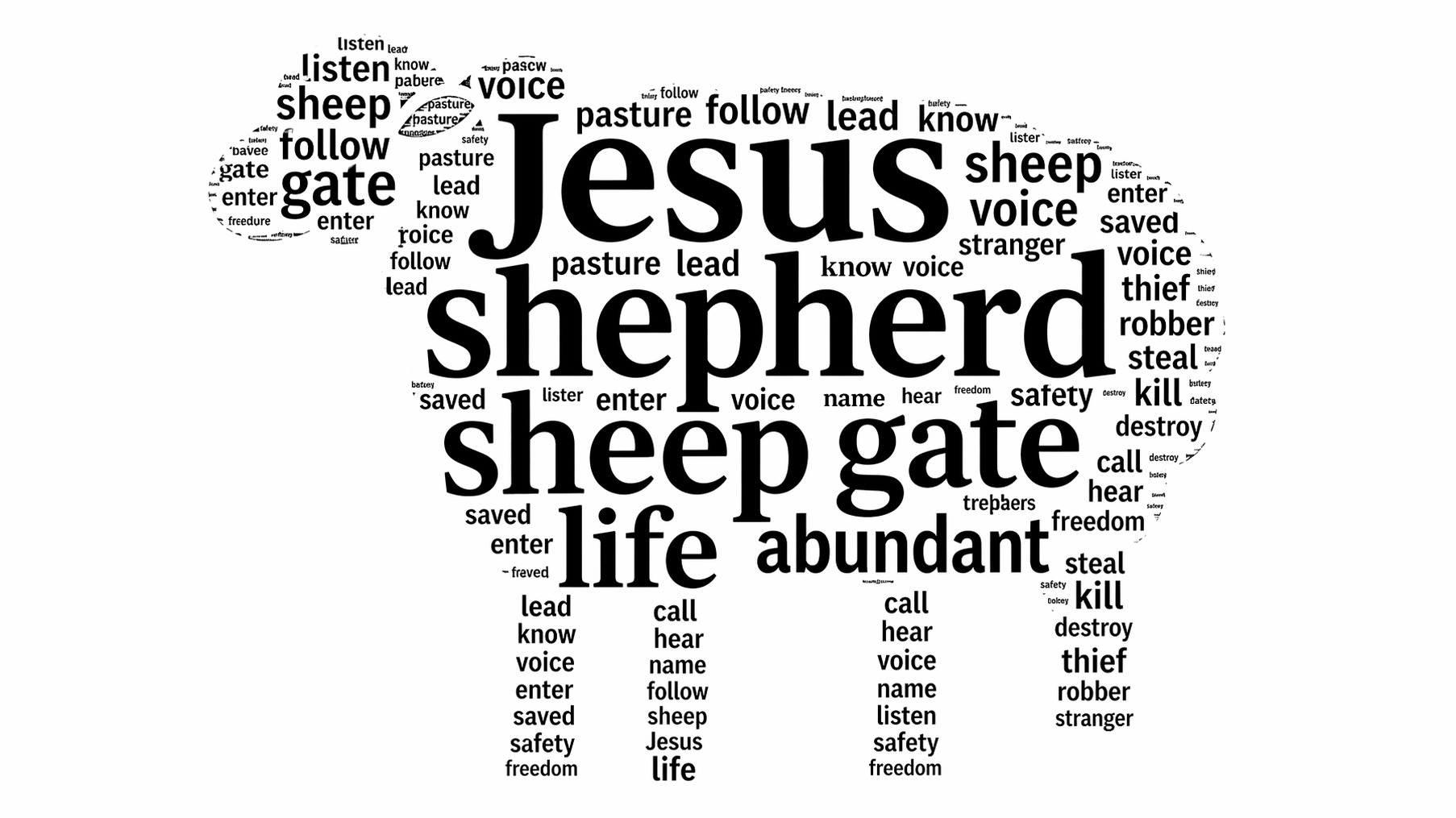
John 10:1–10 speaks to a world full of competing voices. Some voices promise safety but lead people into fear. Some claim authority but use people instead of serving them. Into that confusion, Jesus gives one of His clearest images. He is both the shepherd who truly knows the sheep and the gate through which they find safety, freedom, and life. This passage is not sentimental. It’s sharp, protective, and deeply comforting at the same time.
Jesus speaks this right after the conflict in John 9, where the man born blind has been healed and then pushed out by religious leaders who cared more about preserving control than recognizing the work of God. That matters because John 10 is not floating in the air as a nice pastoral picture. It grows out of a real clash between false shepherding and the saving work of Jesus. The leaders who should have cared for God’s people have acted more like strangers and thieves. Jesus contrasts Himself with them and shows what God’s care actually looks like (Keener).
The image would have made sense to His hearers. Sheepfolds, shepherds, gates, and hired watchmen belonged to everyday life. But Jesus uses those ordinary details to say something eternal. He is not merely one guide among many. He is the true entrance into life with God. His voice is not one option on a crowded spiritual shelf. It is the voice that calls people by name and leads them into life that is full, secure, and free under God’s care (Köstenberger).
This passage also reminds us that salvation in John is never just about getting to heaven one day. Jesus speaks about present life, present protection, present belonging. The sheep go in and out and find pasture. That’s an image of peace, provision, and trustworthy leadership. In a world where people are often manipulated, scattered, and worn down, Jesus doesn’t take from His people. He gives to them. That difference sits at the heart of this text (O’Day).
Origin and Name
The Gospel takes its name from John, traditionally understood to be John the son of Zebedee, one of the twelve disciples. From the earliest centuries of the church, this Gospel has been connected with the beloved disciple who stood close to Jesus and bore witness to Him. The name fits the book’s deeply personal and reflective character, where memory, testimony, and theology work together to show who Jesus is (Morris).
Authorship
Early Christian tradition strongly links this Gospel to John, though many scholars note that the final form of the book likely reflects both apostolic witness and careful shaping within the Johannine community. What matters most for interpretation is that the Gospel presents itself as grounded in eyewitness testimony and written with theological purpose, not as detached speculation or legend (Köstenberger).
Date and Setting
John was likely written near the end of the first century, often dated around AD 90, though some place it a bit earlier. It emerged in a setting where believers in Jesus were increasingly facing tension with synagogue communities and living under Roman power. That setting helps explain John’s concern with witness, rejection, identity, and the need to remain faithful in the face of opposition (Keener).
Purpose and Themes
John states his purpose clearly, that readers may believe Jesus is the Messiah, the Son of God, and by believing have life in His name. Major themes include belief and unbelief, light and darkness, truth and falsehood, eternal life, the identity of Jesus, and the intimate relationship between Jesus and the Father. John keeps pressing one central question, who is Jesus, really? (O’Day).
Structure
The Gospel is often understood in broad movements. The opening prologue announces the Word made flesh. The “Book of Signs” shows Jesus through His public ministry and signs. The “Book of Glory” turns toward His death, resurrection, and exaltation. John 10 falls within the public ministry section, where Jesus’ words and works steadily reveal both His identity and the divided response to Him (Moloney).
Significance
John stands as one of the clearest biblical witnesses to the divinity of Christ and the gift of life through Him. It gives the church language for worship, discipleship, and assurance. Again and again, John shows that to know Jesus is to know the Father and to enter the life God intends for His people (Morris).
John 10:1–10 belongs closely with the events of John 9. Jesus has just exposed the spiritual blindness of leaders who claim to see. The healed man, once cast out, becomes a living example of what happens when the voice of Jesus reaches someone whom others dismiss. So when Jesus begins talking about thieves, strangers, shepherds, and sheep, He is not changing subjects. He is interpreting what just happened. The man born blind has heard the Shepherd’s voice. The religious leaders have acted like strangers to the flock (Keener).
Within John’s Gospel, this passage also develops one of the major themes of the book, revelation through contrast. Jesus is light over against darkness, truth over against falsehood, life over against death. Here He is the true shepherd over against false leaders and the gate over against all false entrances to safety and salvation. John wants readers to see that not every spiritual authority is trustworthy and not every claim to lead people toward God is real (Köstenberger).
Within the larger biblical story, the shepherd image reaches back through the Old Testament. God is Israel’s Shepherd in places like Psalm 23. Israel’s kings and leaders were meant to shepherd the people but often failed. Ezekiel 34 especially stands behind this passage, where God condemns false shepherds who feed themselves instead of the flock and promises that He Himself will come shepherd His people. When Jesus speaks this way in John 10, He is not only offering comfort. He is taking up language that belongs to God’s own covenant care and applying it to Himself (Moloney).
That means John 10:1–10 is about more than personal reassurance. It is about divine identity, covenant faithfulness, and God’s promise to gather, protect, and give life to His people. The shepherd long promised in Scripture now stands in front of them and speaks (O’Day).
John Wesley would have heard in this passage the grace of God going before us. The sheep know the shepherd’s voice because grace has already been at work awakening them to respond. Jesus does not wait until the sheep become wise enough or strong enough to rescue themselves. He comes, calls, leads, and gives life. That is the movement of prevenient grace, God acting first, God making response possible, God drawing people toward salvation before they could ever claim the initiative as their own (Collins).
Wesley also stressed that salvation is not only pardon but life renewed in communion with Christ. Jesus says He came that they may have life, and have it abundantly. For Wesley, that would not mean shallow prosperity or ease. It would mean life restored to its true purpose, life shaped by holy love, life lived in fellowship with God and neighbor. Christ does not merely rescue people from danger. He forms them into a people who live under His shepherding care and grow in grace (Collins).
This passage also fits Wesley’s concern with assurance. The sheep are not left to guess forever whether they belong. They hear His voice. They follow Him. They find pasture. Wesley never reduced assurance to emotion alone, but he did believe the Spirit gives believers a real witness that they belong to God. Jesus’ image here carries that same note of personal recognition and secure belonging.
John 10:1–2, The Contrast Between False and True Shepherding
Jesus begins with a picture of someone climbing into the sheep pen by another way. That person is not a shepherd but a thief and a robber. The point is simple and serious. Illegitimate leadership does not enter honestly. It takes, manipulates, and harms. By contrast, the true shepherd comes through the gate. His authority is not stolen. It is rightful and open. In context, Jesus is exposing leaders who claim to guide God’s people but do not reflect God’s character. They use religious standing for control rather than care (Keener).
John 10:3, The Shepherd Knows the Sheep by Name
The gatekeeper opens for the true shepherd, and the sheep hear his voice. Then Jesus says the shepherd calls his own sheep by name and leads them out. That is personal language. Jesus does not deal with people as a faceless mass. He knows them individually. In John’s Gospel, being known by Jesus is bound up with being loved, called, and brought into truth. The image also carries tenderness without weakness. The shepherd leads; he does not merely admire the sheep from a distance (O’Day).
John 10:4–5, The Sheep Follow the Voice They Know
When the shepherd has brought out all his own, he goes ahead of them, and the sheep follow because they know his voice. They do not follow strangers. This is a picture of trust shaped by relationship. Jesus is not describing blind obedience to any religious authority. He is describing the learned recognition of the One who is true. The passage assumes that discernment matters. Sheep survive by knowing the difference between the shepherd’s voice and every counterfeit voice that tries to claim them (Köstenberger).
That has real weight in John, where false belief and spiritual deception are ongoing concerns. The voice of Jesus is recognized not by outward force but by its truth and by the witness of God working within the hearer.
John 10:6, The Failure to Understand
John says Jesus used this figure of speech, but they did not understand what He was telling them. That misunderstanding is typical in John. People hear Jesus on one level while He speaks on another. Yet the problem is not intellectual difficulty alone. In John, misunderstanding often reveals spiritual resistance. The issue is not that Jesus has been unclear beyond all hope. The issue is that some hearers are unwilling to see what His words expose about themselves (Moloney).
John 10:7–9, Jesus as the Gate
Jesus shifts the image and says plainly, “I am the gate for the sheep.” This is one of John’s great “I am” sayings. Jesus is not only the shepherd who leads. He is also the gate through which salvation is found. The claim is exclusive, but not narrow in the petty sense. It is exclusive because salvation is located in a person, not in human systems, religious performance, or self-made access to God. “Whoever enters through me will be saved.” That language includes both rescue and ongoing security. Then Jesus adds that such a person will come in and go out and find pasture. That is a picture of freedom under protection, not imprisonment. Jesus does not pen people in to diminish them. He brings them into real life under His care (Morris).
John 10:8, Thieves and Robbers
When Jesus says all who have come before Him are thieves and robbers, He is not dismissing faithful figures from Israel’s history. John’s Gospel is deeply rooted in Israel’s Scriptures. The reference is better understood as aimed at false claimants and corrupt leaders who misled the people. The contrast remains between those who exploit and the One who saves. False shepherds always take more than they give. Jesus gives more than He takes (Keener).
John 10:10, Theft Versus Abundant Life
The contrast reaches its clearest form here. “The thief comes only to steal and kill and destroy, I have come that they may have life, and have it to the full.” John’s Gospel uses “life” as one of its richest words. This is not bare existence. It is life rooted in communion with God through Christ. It begins now and stretches into eternity. The abundance Jesus speaks of is not a promise that life will become easy or wealthy. It is the richness of belonging to Him, knowing His care, living in His truth, and receiving what the world cannot counterfeit or sustain on its own (O’Day).
This passage matters apologetically because it presents Jesus in categories no honest reader can reduce to mere moral teacher. He identifies Himself as the decisive way into salvation and life. That is not the language of a helpful spiritual coach. It is the language of One claiming divine authority and unique saving significance. John does not leave much room for a watered-down Jesus who inspires people but makes no real claim on them (Köstenberger).
The passage also speaks to one of the oldest human problems, whom can we trust? People still live among false shepherds, leaders, systems, and ideologies that promise freedom while taking life from those who follow them. Jesus’ contrast between thief and shepherd still fits the world we know. His claim rings true because human history is filled with voices that exploit, while the gospel tells of One who lays Himself down for the sheep later in this same chapter.
Scripture’s coherence also matters here. The shepherd theme runs from Genesis echoes of flock-keeping, through Psalm 23, through the condemnation of false shepherds in Ezekiel 34, to Jesus in John 10. The Bible tells one long story of God seeking, guarding, and restoring His people. Jesus stands in that story not as a detached symbol but as its fulfillment (Moloney).
John 10:1–10 asks us a plain question. Whose voice are we following?
A lot of people live worn out by voices that demand, flatter, threaten, or confuse. Some of those voices come from culture. Some come from religion. Some come from our own fear. Jesus does not add to that chaos. He cuts through it. He knows His people, calls them, leads them, and gives them life.
That means discipleship is not mainly about running faster in our own strength. It begins with learning to recognize the Shepherd’s voice over the noise. It means trusting that the One who leads us is not trying to take life from us but give it. It means refusing the thieves, whether they come as false teaching, false security, or the lie that we can save ourselves.
For the church, this passage is also a warning. Any leadership that manipulates, wounds, or feeds on the flock stands under Jesus’ judgment. Real shepherding sounds like Jesus. It protects, guides, serves, and gives life.
For ordinary believers, there is comfort here too. If you belong to Christ, you are not anonymous. You are not one more face in the crowd. He knows your name. He still leads. He still guards. He still gives abundant life, even in a hard world.
Psalm 23
Isaiah 40:10–11
Ezekiel 34:1–16
John 9:35–41
John 14:6
Hebrews 13:20
1 Peter 2:25
Revelation 7:17
